Home & organization
How to Choose a Laundry Hamper for Your Space and Washing Routine
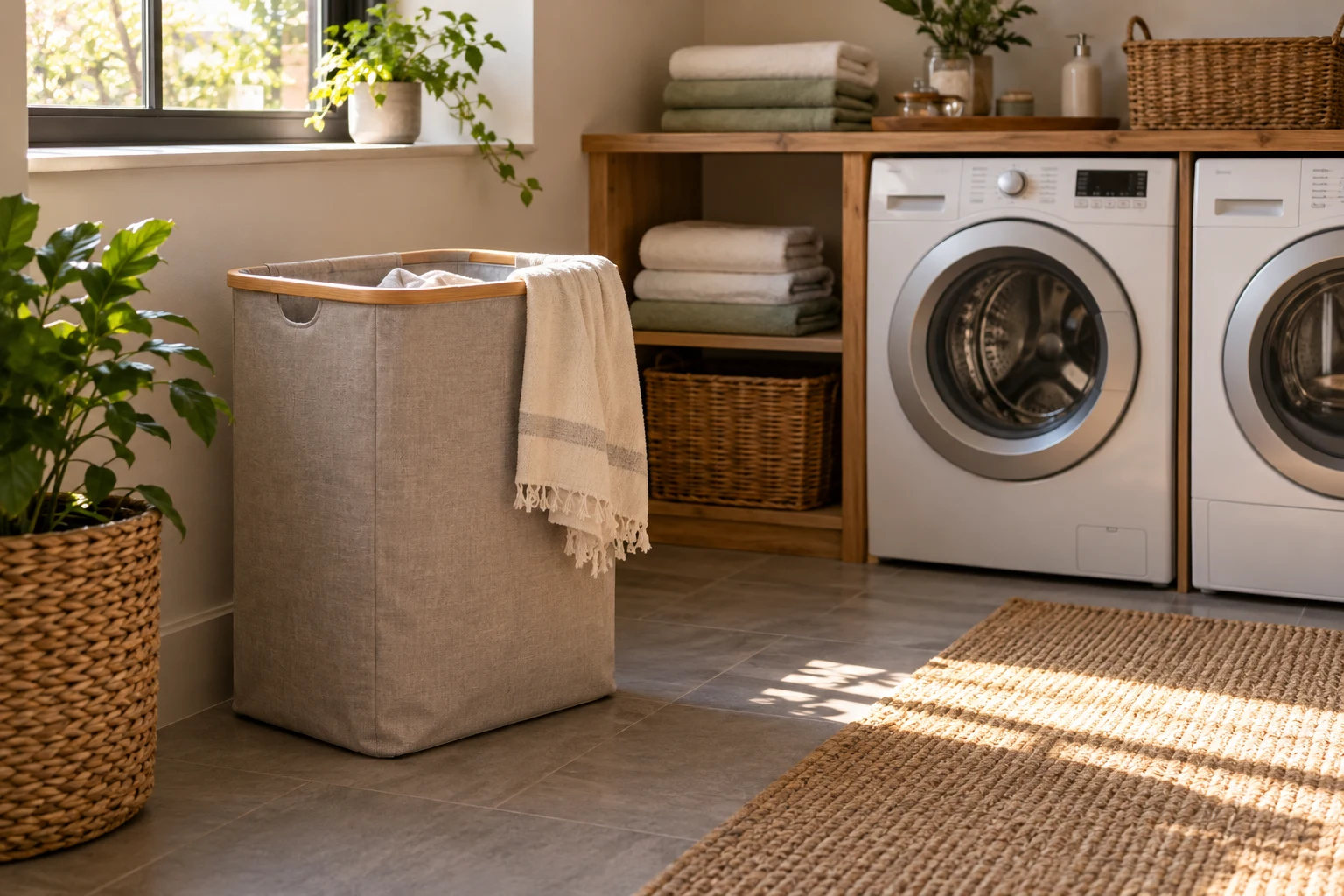
At a Glance
| Decision point | Useful choice | Trade-off to consider |
|---|---|---|
| Sorting | Compartments matching actual washing groups | Simple collection if sorting happens elsewhere |
| Transport | Comfortable loaded handles or removable bags | Wheels only when the route suits them |
| Location | Working clearance for lids and bag removal | A closed footprint that blocks normal room use |
Follow the laundry before choosing the hamper
A laundry hamper is part of a route, not just a piece of bedroom furniture. Clothes enter it, wait, move to the washing area, and eventually return in some other form. A hamper can look right in the room while being awkward at every transfer. Before shopping, follow one normal load from the place where clothing is removed to the machine. Notice stairs, narrow doors, places where the basket waits, and the hands you need for opening doors or carrying other items.
Describe the difficulty you want to solve. Perhaps the current hamper is too wide for the bathroom, its handles are uncomfortable on stairs, or clothes collect on the floor because the lid is inconvenient. These are different problems and may require different designs. Buying a larger hamper simply because it holds more can make the carrying problem worse. Choose for the stage of the routine that creates the most repeated effort.
Compare capacity with the way you wash
A very large hamper can hold a substantial collection, but that does not establish the right size for your household. Think about how often you wash and whether laundry is handled as one group or several. A hamper that is much larger than the load you normally move may invite a difficult lift. Several smaller collections can be easier to carry, provided they do not create clutter or unnecessary sorting work.
Check usable capacity and dimensions rather than relying only on a photograph or a volume figure. Tall narrow hampers and wide shallow baskets can behave differently with the same amount of clothing. Consider whether items are dropped in loosely or folded before transport. If the hamper fits beneath a counter, allow space for the way its lid or bag opens. The working clearance matters as much as the closed footprint.
Decide whether sorting compartments will be used
Separate compartments can help when they match real laundry groups and the people using them understand the distinction. They are less useful when everything is placed in the nearest opening and sorted again later. Observe your existing habits before choosing several compartments. A system with fewer obvious categories may be more dependable than a large unit that requires frequent decisions every time clothing is put away.
Also consider how each section is emptied. Removable bags can let you take one group without moving the whole frame, but check their handles, closures, and loaded shape. A compartment may be easy to fill and awkward to lift out when full. If you normally sort beside the washing machine, a simple hamper with a clear transfer routine could be enough. The point is to remove repeated handling, not to add another sorting stage because the furniture provides one.
Compare rigid, flexible, and removable-bag formats
A rigid basket can be easy to set down and may keep its opening clear while you load it. Its fixed shape can be inconvenient on stairs or through narrow gaps. A flexible bag may fit into a small room or collapse when empty, but can sag or change shape when loaded. Think about where the container will be carried and where you need it to stand without support.
A frame with removable bags separates collection from transport. That can suit a household where the hamper remains in one room while the bags travel. Check how the bags attach and whether removing them requires clearing items around the frame. Replacement liners or bags may matter for long-term use, so verify availability for the exact model. Do not assume a generic replacement will fit a proprietary shape or attachment system.
Judge handles with a realistic load
Handles are easy to overlook when a hamper is empty. Look at where they sit, how much room they provide for your fingers, and the way the load hangs from them. A handle cutout high on a rigid basket can feel different from straps on a fabric bag. Consider whether you carry the hamper in one hand, with both hands, or against your body. Choose the format that works on the route you actually use.
Test carrying with a representative load while following the product's intended use and stated limits. Check whether the basket blocks your view of the path or catches a doorway. If stairs are involved, do not assume wheels solve the problem. A wheeled unit may help on a suitable level surface and still require lifting at a threshold or staircase. The useful feature is the one that makes the complete journey manageable.
Check the location with doors and lids moving
Measure the hamper's intended position with nearby doors, drawers, and cabinets open. Then allow for the lid, bag removal, or handles in use. A unit that fits neatly into a corner may be inconvenient if its lid hits a shelf or the liner cannot be lifted without moving the frame. Mark the footprint on the floor and rehearse the normal movements before ordering a large piece.
In a bathroom or dressing area, consider what else needs access to the space. A hamper should not force you to move it every time a cupboard is opened or the room is cleaned. If floor space is limited, a smaller unit with more frequent transfers may work better than a large furniture-style hamper. Capacity is useful only when the hamper can be used and maintained where it stands.
Make cleaning and drying straightforward
Laundry storage needs its own care routine. Read the instructions for the frame, body, lid, and liner rather than assuming they can all be cleaned in the same way. Removable fabric parts may have different washing and drying requirements from the surrounding structure. Choose a design whose surfaces and corners you can reach without an elaborate disassembly process.
Be thoughtful about what is left inside. A closed container may conceal visual clutter, but it is not a reason to leave damp items sitting indefinitely. Follow appropriate care for the textiles and the hamper. If the normal location makes ventilation or cleaning awkward, change the arrangement rather than expecting a decorative lid to solve the underlying issue. A simple open format can be easier to maintain in some routines, while other households may reasonably prefer a lid for appearance.
Consider the trip after washing as well
The hamper used for collecting clothes may not be the best vessel for moving clean laundry. Think about how you unload the machine, carry items to drying or folding areas, and return them to storage. You may already have a useful basket for that part of the route. Buying a new collection hamper does not necessarily mean replacing every other container in the process.
If one basket serves several stages, check whether its cleaning and availability fit that role. A basket still holding unsorted clothing cannot simultaneously carry a clean load. A separate simple carrier may make the routine easier without requiring a larger hamper. The objective is to reduce bottlenecks. Consider the sequence of tasks rather than assuming a single large piece should handle every job because it has enough volume.
Read reviews for route-specific clues
Look for comments from people using the hamper in a similar way: carrying liners upstairs, fitting it below a shelf, or moving it across a threshold. Check whether the review refers to the same size and material. A report that a unit is awkward to carry can be highly relevant to a stair-heavy home and less important if the frame never moves. Context matters more than the general enthusiasm of the review.
Pay attention to recurring observations about attachment points, liner fit, closures, and cleaning. Distinguish an inconvenient design from a mismatch between the product and the reviewer's available space. Verify dimensions and care instructions directly with the maker where possible. If the important question is whether a full liner can pass under a shelf, a star average will not answer it; measurements and a realistic plan will.
Worked example: collection upstairs, washing downstairs
In a home where laundry travels between floors, the collection unit and the carrying container do not have to be the same object. A frame with a removable bag may let the hamper remain in the bedroom, but the loaded bag still needs comfortable handles and a manageable size. A simple smaller basket can also work if it is easy to retrieve and return. The useful comparison concerns the full staircase route, not the appearance of the hamper in its corner.
Rehearse a normal load and the return trip before committing to a larger system. Notice whether the container catches the doorway, blocks your view, or requires an awkward grip. If sorting compartments produce several partly full bags that must be carried together, the system may add complexity. A smaller transfer at an appropriate point in the routine may be preferable. Choose the arrangement that makes the actual work easier without turning capacity, compartments, or wheels into goals in their own right.
Make the decision around a complete cycle
Before committing, simulate the entire routine with the proposed format. Collect, remove, carry, set down, empty, clean, and return it. Notice any step that requires extra rearranging or an awkward grip. A small annoyance repeated several times a week can matter more than the appearance that first attracted you. Keep the return conditions in mind while testing fit and handling, and avoid assuming an inconvenient feature will become pleasant through habit.
Choose compartments only when they simplify sorting, wheels only when the route suits them, and extra capacity only when the load remains manageable. A good hamper supports the way the household actually washes clothes. It does not have to contain every possible load or match every piece of furniture. The best result is a routine with fewer transfers, clearer access, and a container you can comfortably move and maintain without thinking about it every time laundry needs doing.
Questions & Answers
Are several sorting compartments always helpful?
They help when the categories match the household’s real washing routine and can be emptied conveniently. If everything is sorted again beside the machine, extra compartments may add handling and floor space without much benefit.
Will wheels make a hamper easier to use upstairs?
Wheels may help on a suitable level route, but do not assume they address stairs or thresholds. Evaluate the loaded carrying method and the complete journey between collection, washing and return.
Should I choose a removable liner?
A removable bag can separate collection from transport. Check how it attaches, how it is lifted when full, its care instructions and whether replacements are available for the exact format.